

 Facebook
 X
X
 Pinterest
 Copy Link
Top Mistakes Homeowners Are Making in 2026 (And How To Avoid Them)

Let’s be clear: selling your house is absolutely possible right now. According to the National Association of Realtors (NAR), roughly 11k homes sell every day in this country.
And the sellers who are making their moves happen all have one thing in common: they’ve adjusted their strategy to match today’s market. They’re realizing inventory has grown. Homebuyers are more selective. And buyer expectations are higher.
The sellers who struggle are usually approaching today’s market with yesterday’s expectations. Here are the three biggest mistakes they’re making – and how to avoid them.
1. Pricing Based on What Their Neighbor Got a Few Years Back
Setting your price is the most important decision you make when you sell – and the one that’s most often mishandled. Realtor.com data shows almost 1 out of 5 sellers in 2025 had to drop their price. Here’s what those sellers went wrong.
Buyers have more choice and more negotiating power now that inventory has grown. And house hunters will actively avoid your house is if feels like it’s priced too high. That’s why overpricing usually leads to:
- Fewer showings
- Less competitive (or lowball) offers
- Longer time on market
And all three of those side effects are things you don’t want to deal with.
What To Do Instead: The good news is the cure is simple. Just price for today’s buyer, not yesterday’s headlines. Lean on your agent’s knowledge of recent comparable sales, current competition, and local buyer behavior to land in the value “sweet spot” that drives traffic and urgency from day one.
2. Trying To Skip Repairs That Buyers Now Expect
A few years ago, you could sell as-is and still get well above asking. Today? Not so much. Right now, NAR says two-thirds of sellers are making at least some repairs.
And the reason why is simple. In a market with more inventory, buyers compare homes side by side. Homes that don’t show well (or feel dated) are going to lose attention quickly, even if the issues are minor.
What To Do Instead: Ask your agent which high-impact, low-stress updates they’d recommend for your house. The goal isn’t perfection. It’s helping buyers see themselves moving in without a mental to-do list. Small investments in staging, repairs, and curb appeal can make a huge difference in how quickly offers come in – and how strong those offers are.
3. Playing Hardball When Buyers Try To Negotiate
Today’s buyers have housing affordability at the top of their minds. And since money is already tight, they’ll be pickier and will probably ask for some compromises from you. Whether that’s making repairs, giving them a credit at closing, or taking just a few thousand dollars off your asking price, negotiating is normal again.
So, if something pops up in the inspection, you’re going to need to be open to talking about it. If you’re not, you may very well see your buyer walk away. And some sellers are figuring this out the hard way. Redfin data shows one of the big reasons home sales fell thru in 2025 was inspection or repair issues. Odds are those homeowners weren’t willing to flex a bit to get the deal done.
What to Do Instead: Meet with your agent to make sure you understand what buyers in your area care the most about. Align your price with value, present the home clearly and confidently, and stay open to reasonable negotiations that keep deals moving forward.
Bottom Line
The sellers who succeed in this market aren’t doing anything extreme. They’re pricing their house right, making strategic repairs, getting local guidance, and making decisions based on how buyers actually behave today. Those small but mighty mindset shifts could make or break your sale.
Want a real plan tailored to your home and your neighborhood? Let’s talk.
The Price You Set Can Make (or Break) Your Sale

There’s one decision you’re going to make when you sell that determines whether your house sells quickly, or it sits. Whether buyers make an offer, or scroll past it. Whether you walk away with the maximum return, or you end up cutting the price later.
And that’s your asking price.
The #1 Mistake Sellers Make Today: Trusting the Wrong Number
If you’re thinking of moving and trying to figure out what your house may sell for, it’s tempting to start with an online home value tool. They’re fast, free, and easy. And you don’t have to talk to anyone. But here’s the problem: they don’t know your house.
And that can be a bigger drawback than you realize.
Where Online Estimates Fall Short
Online tools often lag behind the market. They look in the rearview mirror, relying on closed sales and delayed information. And in that sense, they’re using incomplete data.
That’s not a miss in how these systems are built. Some information just isn’t available online. Bankrate explains:
“While these tools can be a useful starting point, keep in mind that they typically do not provide the most accurate pricing. Algorithms can only rely on the information available; they can’t account for things like a home’s condition or renovations made since the last public information was updated.”
They can’t see:
- The unique features that make your house special
- All the work you’ve put in to keep it in good condition
- Or, how in-demand your specific neighborhood is right now
So, while they may do a good job in some cases, they can’t be as accurate as a local agent who has boots on the ground day in and day out.
In a market where buyers have more options, a seemingly small margin of error can cost you thousands if you price too low, or weeks of lost momentum and time if you price too high.
If you want to sell for the most money and in the least amount of time, you don’t want the fast answer on how to price your house. You want the right one.
That’s why the savviest homeowners today don’t rely on algorithms when it actually matters. They rely on people, specifically trusted local agents.
What an Expert Agent Brings to the Table
According to 1000WATT, sellers overwhelmingly believe real estate agents have the best sense of a home’s true value, far more than any automated tools.
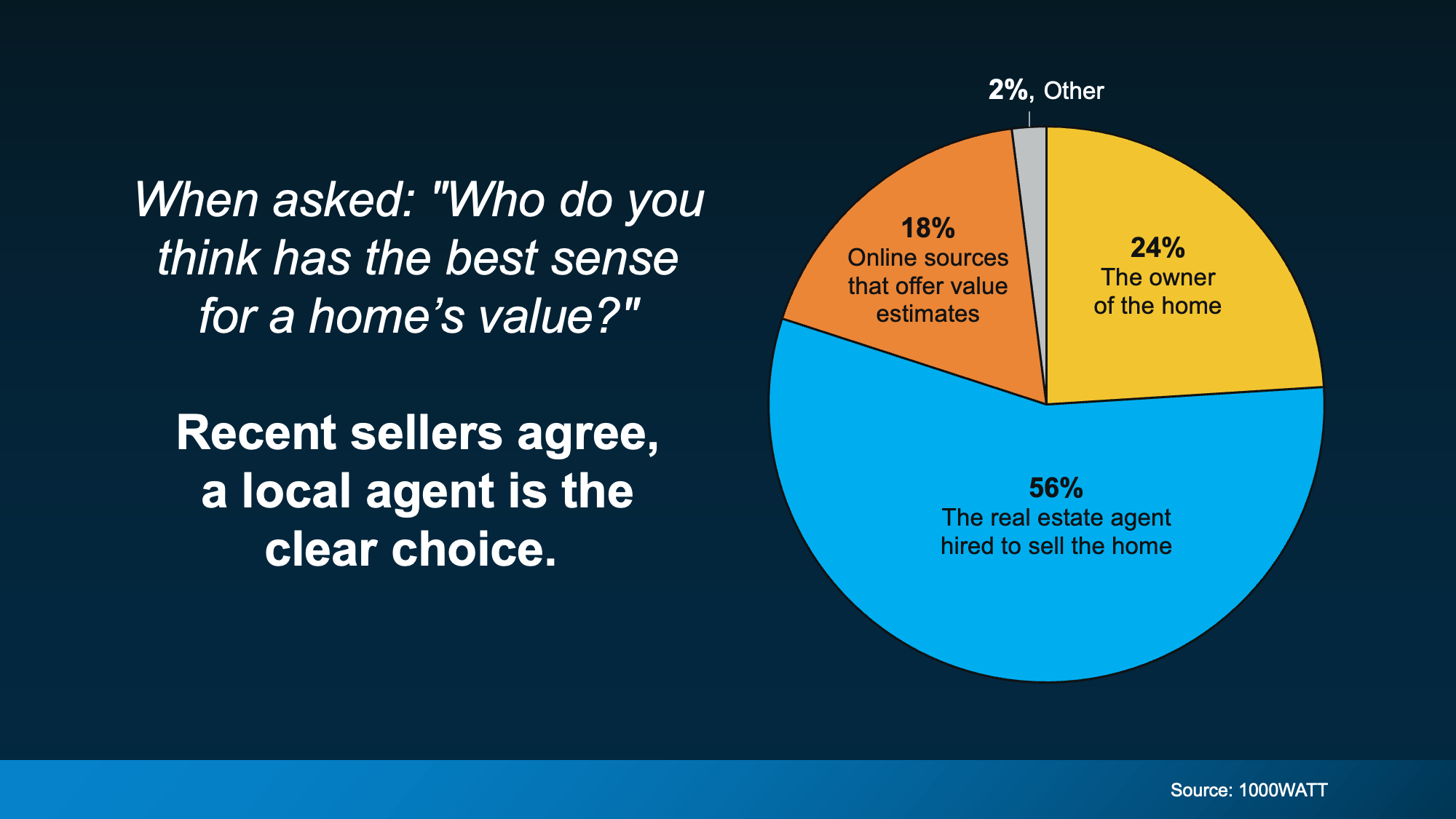 That confidence isn’t accidental. As Bankrate puts it:
“A professional appraiser or real estate agent can visit the home in person, assess the neighborhood as a whole as well as the individual property, perform more thorough market research, and consider subjective details.”
And those details matter. A skilled local agent doesn’t just pull reports. They know what’s happening right now:
- What buyers are paying this month, not last month, or even last year
- How your home compares to the current competition in your neighborhood
- Which features add value based on what buyers are willing to pay for today
- How to price your house to create urgency in this market
And once an agent steps foot in your house, they may even find your online estimate undershot your value. So, if you stuck with the estimate you got online, you’d actually be leaving money on the table. And no one wants that.
Bottom Line
While online tools can give you a rough starting point, only a local expert can give you a price that actually works.
If you want to know the right number for your house, not just the easiest one to find, let’s talk.
Renting vs. Buying: The Numbers Might Surprise You

Renting can feel like the easier choice right now. There’s no big down payment. No dealing with surprise repairs. And no long-term commitment.
But then your rent goes up again. And again. And suddenly the thing that seemed flexible starts looking… expensive, especially considering you’re not building any equity. And once that happens, it’s easy to feel a little trapped in the cycle.
That’s because there’s so much chatter today about how buying a home isn’t affordable. But the truth is, the math may work out better than you’d expect based on what’s changed recently.
Buying Is More Affordable Than Renting in Many Areas
In a lot of places today, owning a home actually costs less each month than renting a 3-bedroom home. And recent data from ATTOM shows that’s true in nearly 58% of counties across the U.S. (see chart below).
And that’s after you factor in things like insurance and typical maintenance costs.
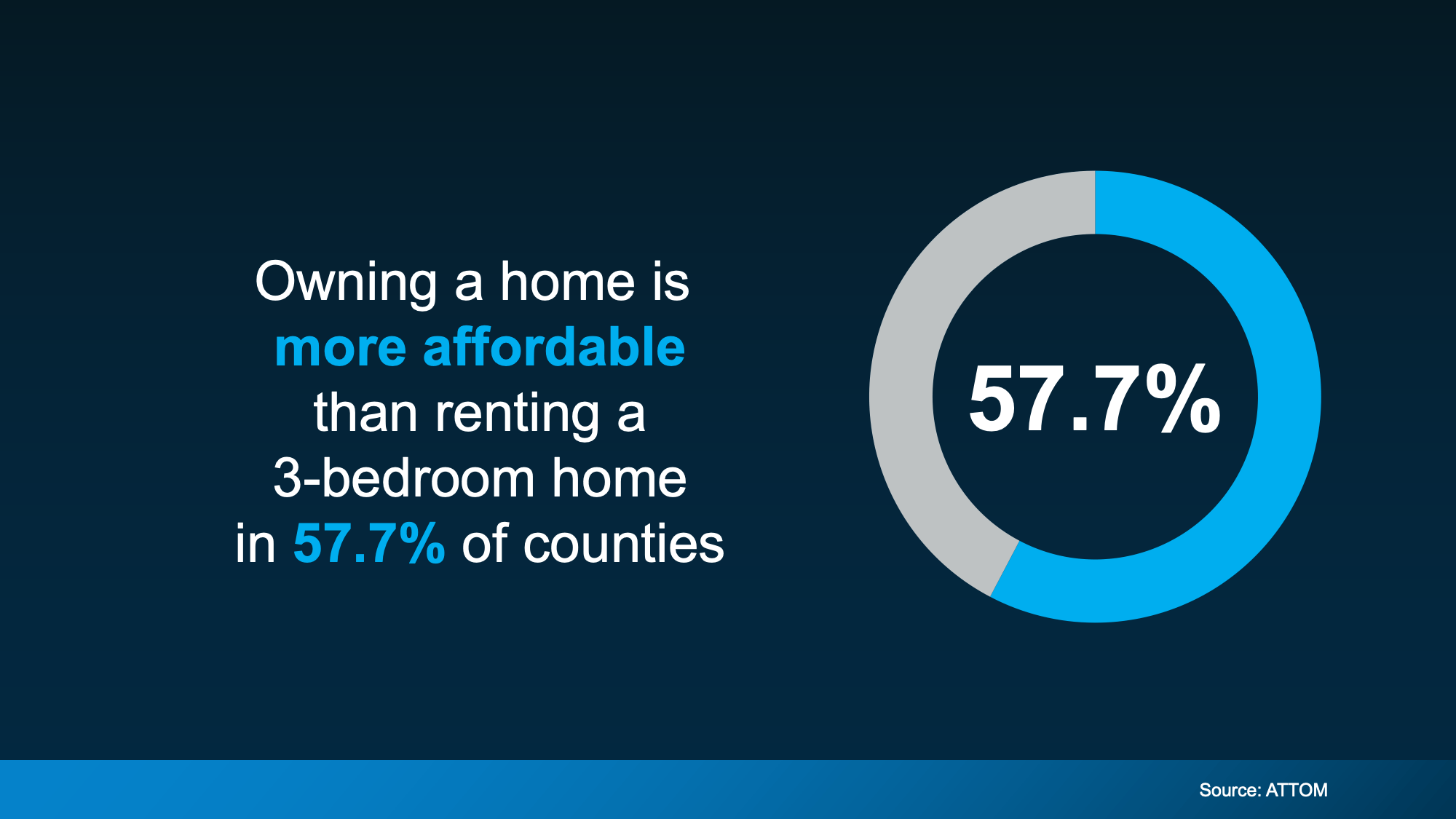 In other words, even though it may feel like a bit of a shock, the numbers show rent often stretches monthly budgets more than owning does. That’s thanks to slower home price growth, more homes for sale, and monthly mortgage payments starting to ease as rates come down.
Affordability Still Varies by Region
Now, even though nationally the balance has shifted, that doesn’t mean buying is more affordable in every market or for every renter.
While buying is more affordable than renting in nearly 58% of counties nationwide, that share looks different depending on your region (see graph below):
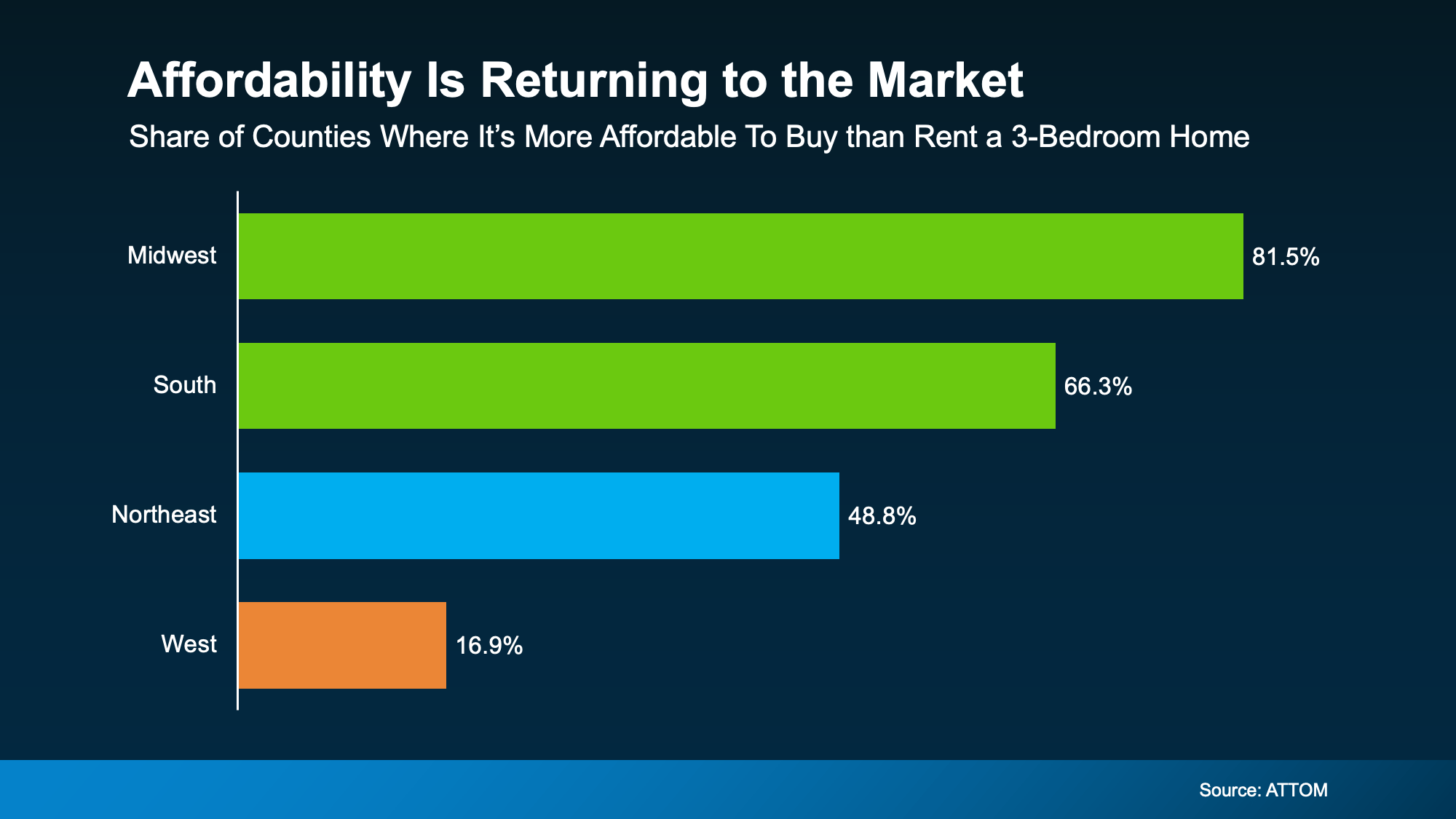
The biggest improvement is happening in the Midwest and South. But if you’re living in the West, things could still feel tight.
The takeaway? How affordable buying is really depends on where you live. And the only way to know how this plays out where you live is to look at the numbers locally.
So, What’s Still Holding Buyers Back?
Maybe you’re nodding along so far but thinking, “Okay, but I still can’t afford the upfront costs.” If that’s your reaction, you’re not the only one.
For many renters, the biggest hurdle isn’t the monthly payment alone. It’s the down payment, too.
But you’re not out of options. Here’s the part most people don’t hear enough about: there are thousands of down payment assistance programs available across the country, and many buyers qualify without realizing it.
And the average benefit? Roughly $18,000.
That kind of support can help cover part of your down payment or closing costs, which means you may not need to save nearly as much as you think to get started.
When you combine that with monthly payments that may work better than expected, especially as rates continue to ease and prices cool, buying may feel far more realistic than it looks at first glance.
Bottom Line
The point isn’t that everyone should rush out and buy a home tomorrow.
It’s that renting isn’t always the more affordable option people assume it is – and buying may be more realistic than it feels once you look at the full picture.
If you’re renting and feeling stuck in the “someday” loop, it might be worth a simple conversation. Just a chance to see what’s possible and whether it makes sense for you.
How Your Equity Could Help Younger Generations Buy a Home

For a lot of parents or grandparents, watching a family member struggle to buy their first home right now is hard. That’s because you saw firsthand how homeownership gave your life more stability and helped grow your net worth – and you want your loved ones to have those same opportunities.
But with all the affordability challenges in recent years, that can feel like an uphill battle – even though it’s slowly improving lately. Here’s what you may not realize. You may be in a unique position to help (thanks to the equity in your current house).
The Equity Advantage You May Not Be Thinking About
You’ve likely owned your home for years, maybe even decades. And during that time, two things happened:
- Home values rose
- Your mortgage balance shrank (or you paid it off entirely)
That combination has created substantial equity for many homeowners like you.
And while you may think of that equity as something you want to have in your pocket for retirement, it can also serve another purpose: helping the next generation clear the biggest hurdle in their way.
The #1 Thing Holding Young Buyers Back
When John Burns Research & Consulting (JBREC) asked renters what’s keeping them from buying, the top answer wasn’t mortgage rates or home prices. It was the upfront cost, particularly saving enough for their down payment (see graph below):
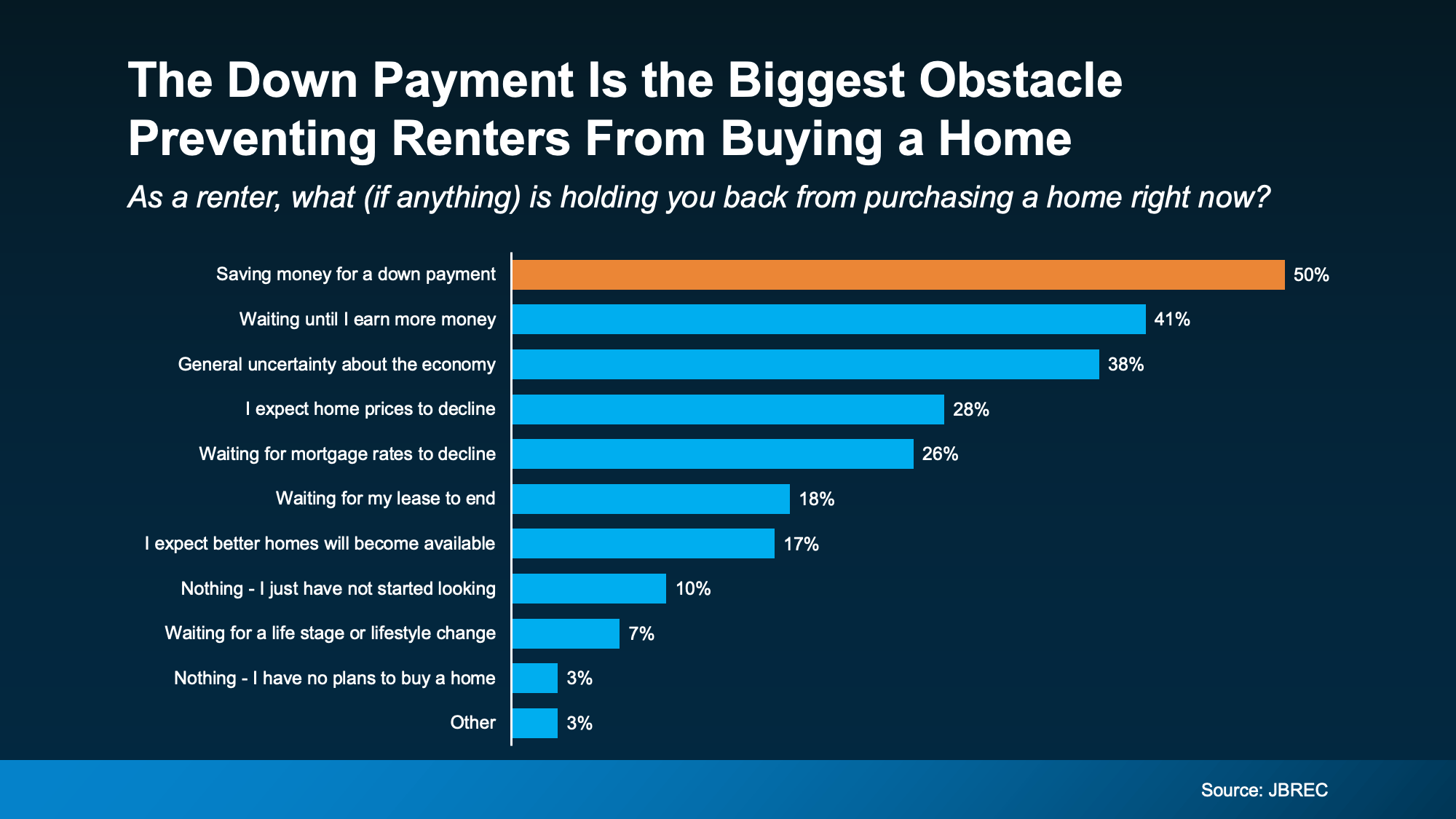 That’s where you may be able to make more of a difference than you realize. You can’t control rates or prices. But you may be able to use your equity to help with this upfront expense. And giving money to your loved one so they buy a home doesn’t mean putting your own future at risk.
Even a small portion of your equity can put them in a position to finally get the keys to their first place – and, if you’re strategic about it, you’d still have a lot leftover for when you retire.
With an estimated $68 and $84 trillion of wealth expected to transfer from older generations to younger ones over the next two decades, many families are already thinking differently about when and how that wealth will be passed down. Maybe it makes sense for your family to think about too.
Help from Loved Ones Is Making a Move Possible for Many First-Time Buyers
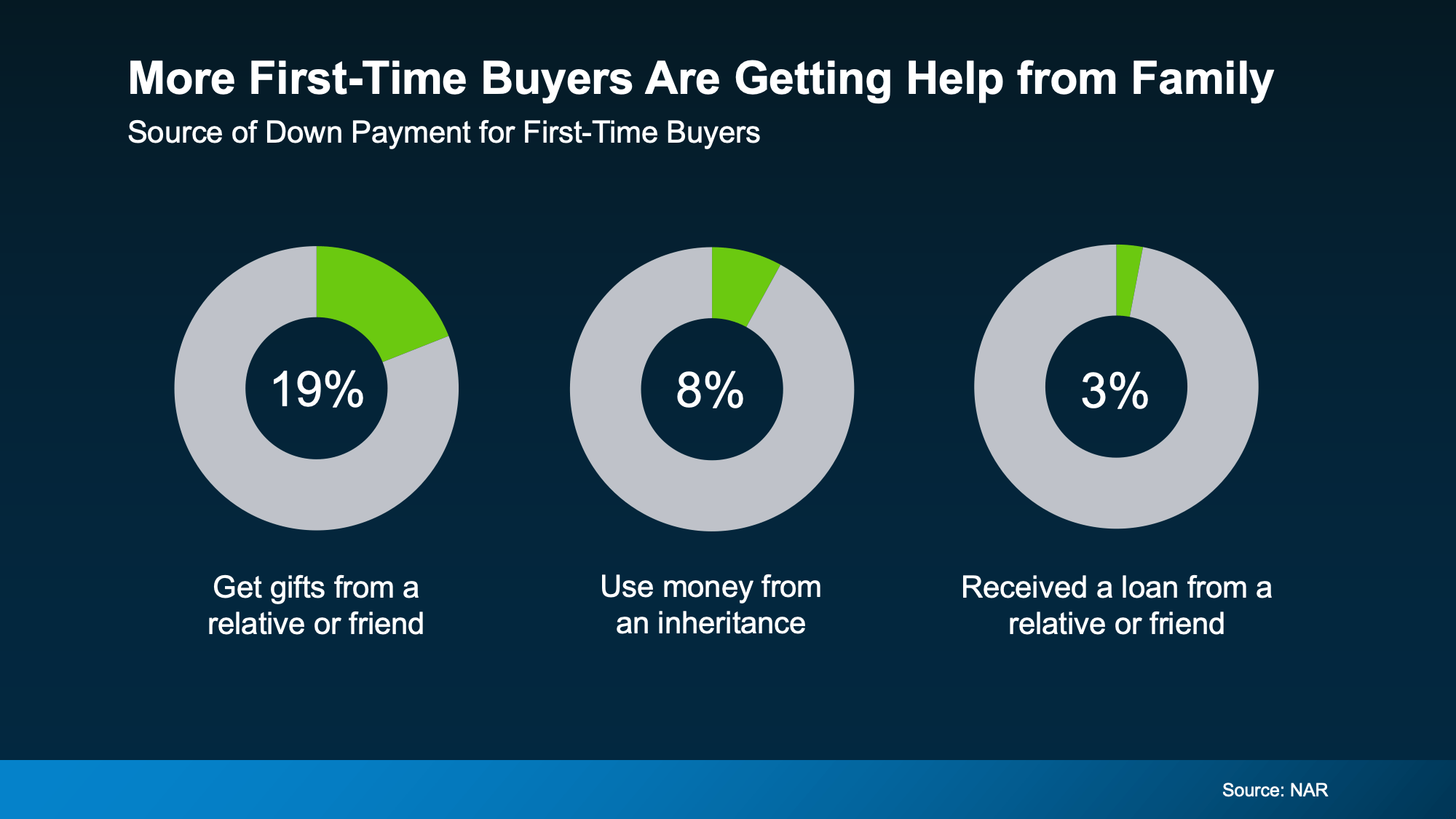
A growing share of young buyers are using gifts and loans from their loved ones to springboard into homeownership. According to the National Association of Realtors (NAR), nearly 1 in 5 first-time buyers use a cash gift from their family or loved ones for their down payment.
And other young buyers are using their inheritance or a loan from someone they know to finally break into the market (see charts below):
 This Is About Opportunity, Not Obligation
 This Is About Opportunity, Not Obligation
Every family’s situation is different, and your decision should be made carefully. It’s just that, if you’ve built up a lot of equity, you may have more room to help than you think.
It’s not just a financial gift. It’s giving stability, security, and a foundation that could change their lives for the better – especially at a time when they may not be able to do it on their own.
Bottom Line
If you’re curious what your home equity could make possible, for you or for your loved ones, let’s start with a simple conversation. Because sometimes the most meaningful investment you can make is for the next generation.
Move-Up Buyers Are Choosing New Construction
At some point, a house that once felt perfect just… doesn’t anymore.
Maybe you need more space.
Maybe working from home turned your dining room into a permanent office.
Maybe the layout just doesn’t match how you live now.
If your current house is starting to feel like it’s holding you back instead of supporting your life, it’s natural to think about making a move. But that brings up the next big question: once you sell, where do you go?
For a growing number of buyers, the answer is something brand new.
New Construction Is a More Popular Choice Lately
According to the National Association of Realtors (NAR), more people are buying new homes than they have in years. The latest annual data available shows 16% of homes purchased were newly built.
At first glance you may not see why that’s a big deal. But that’s actually the highest share of new home purchases in almost two decades.
Why More Buyers Are Choosing a Brand-New Construction
For many buyers, especially move-up buyers, new construction isn’t just about aesthetics. It’s about lifestyle, convenience, and peace of mind.
1. Everything Is Brand New
You’re not inheriting someone else’s projects. No wondering how old the roof is. No budgeting for a new HVAC right after move-in. No big surprises when the previous owners patch job fails. For move-up buyers who’ve been dumping money into updating their current house, that’s a win.
2. You Can Customize Before Move In
If you choose a home that’s still under construction, you could have the chance to pick the flooring, counters, cabinets, hardware, lighting, and so much more. That level of personalization can be a draw for move-up buyers like you, because it allows you to hand pick the fit and finishes you’ve been wanting for so long.
3. A Home Designed for How People Live Today
Most new construction homes are built to current building standards and buyer preferences, which means you could see built-in smart home features, better energy efficiency (which can lower utility bills), and even more modern floor plans and features. And if your layout just isn’t working for you anymore, you may find exactly what you need now in a new home.
4. Neighborhood Amenities
New developments often include shared community spaces like walking trails, parks, playgrounds, or even pools and gyms. For families and active households, that’s a big bonus to have that just a few steps out of their front door.
5. Builder Incentives
Not to mention, since there are more new homes on the market than the norm, builders are motivated to sell what they have. So, you may find they’re more willing to negotiate than you’d expect on things like price, upgrades, and more.
Bottom Line
If your current house isn’t meeting your needs anymore, don’t assume your only choice is an existing home. New construction is becoming a real contender, especially for move-up buyers who want space, features, and a home that works for how they live now.
Curious whether new construction might be a fit for you? Let’s chat.
Four Ways Your Home Equity Can Work for You

You may have heard homeowners today have a lot of equity built up. But what does that really mean? Let’s break it down.
Because your equity isn’t just a number, it’s a powerful asset that can help you take your next big step in life.
How Much Equity Does the Typical Homeowner Have?
Here’s how it works. As you pay down your loan and home prices rise through the years, the share of your home that you own free and clear grows. That’s your equity.
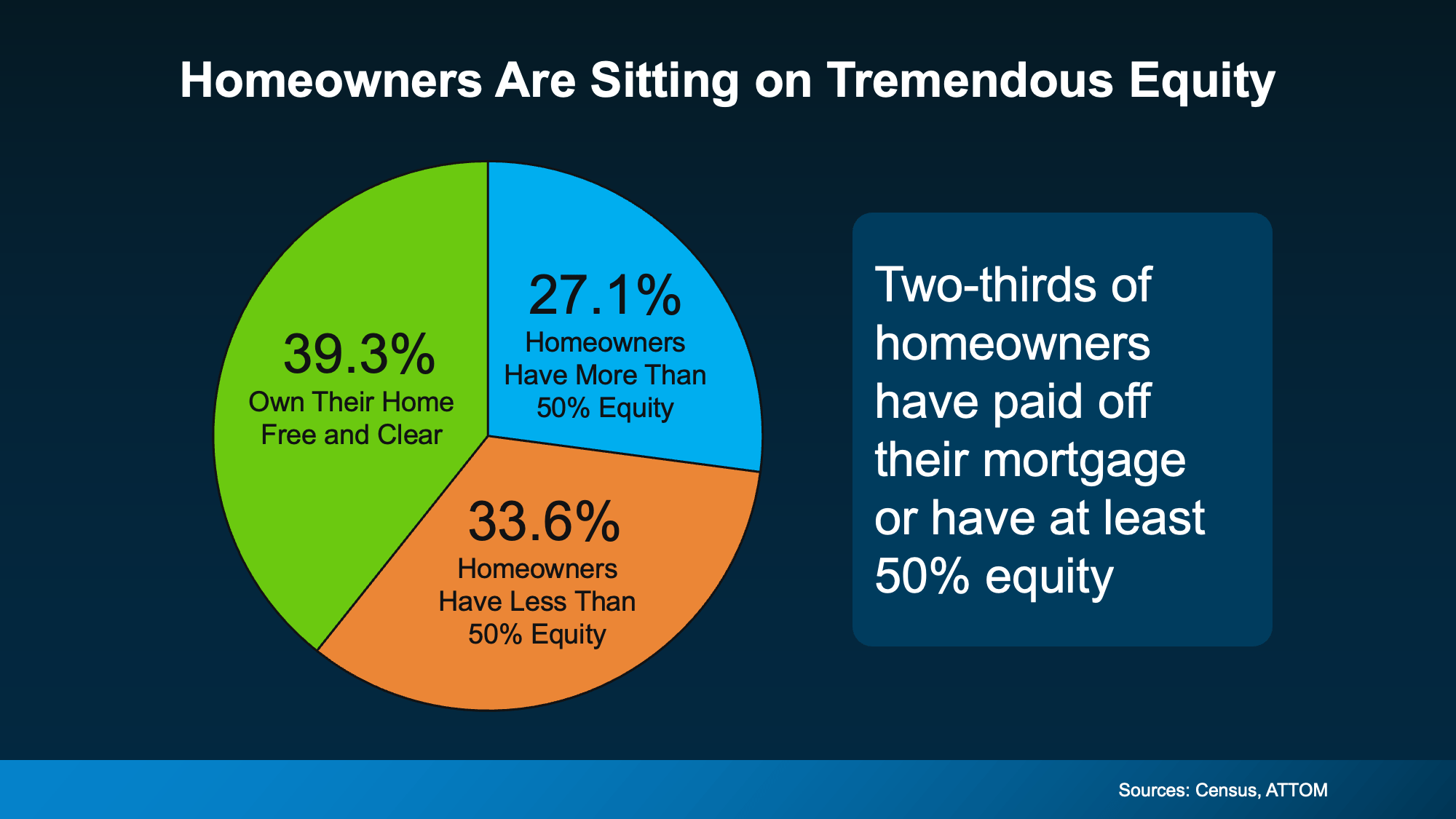
And according to data from the Census and ATTOM, two-thirds of homeowners have a substantial amount of it today.
39% own their home outright without owing anything on it. And another 27% have at least 50% equity in their homes (see chart below):
 That’s a big deal. And just in case you’re wondering how that translates into real dollars, Cotality says the typical homeowner has almost $300k in equity today. That’s six figures.
And whether you have that much, even more, or a bit less, here are a few examples of how you can use it.
Ways You Could Use Your Home Equity
1. Move Into a Home That Better Fits Your Life
Your needs change over time. Maybe your home is starting to feel cramped, or maybe you have more space than you need now that your adult children have moved out. Either way, you can use your equity as a down payment on a home that’s a better fit for what you need now, and going forward. You may even have enough equity to buy your next house in cash.
2. Upgrade Your Current Home
And if you’re not ready to move just yet, you could reinvest it in your current home instead. Renovations like a kitchen refresh or updated bathrooms could add value when it’s time to sell down the line. Just be sure to talk to a real estate agent before you tackle your project list, so you can prioritize updates that’ll give you the biggest return later on.
3. Fund a Major Life Goal
Equity can also help fund your life goals – whether it’s starting a business, saving for retirement, covering education costs, or helping out someone you love. Some homeowners are even passing down some of that wealth to help fund a loved one’s down payment on a home.
4. Avoid Foreclosure in Tough Times
If you’re struggling with payments, your equity can also be a lifeline. Many homeowners who hit financial hardships can sell their homes and walk away with money in their pockets instead of facing foreclosure. If that’s something on your mind, talk to a real estate expert about your options and how your equity can help.
Your Next Steps
If you’re interested in using your equity for one of the reasons above, here’s what to do:
- Step 1: Ask a local agent for a personalized equity assessment on your home.
- Step 2: Meet with a financial advisor if you’re interested in using that equity.
Because when it comes to tapping into this resource, there are a few things you’ll want to keep in mind – like making sure you still have a good loan-to-value ratio (LTV) even if you use some of your equity.
That means, as a general rule of thumb, you want to maintain at least 20% equity in your home as a financial cushion – something many homeowners didn’t know back in the crash of 2008.
The good news is, according to the Intercontinental Exchange, most of today’s equity meets that guideline:
“As of Q4, mortgage holders have $17.3T in home equity, including $11.2T in tappable equity ‒ accessible via cash-out refinances or home equity lines while maintaining 20% equity in the property . . . ”
Bottom Line
Your home equity is one of the biggest financial assets you have. Whether you’re thinking about moving, remodeling, or working toward a big goal, it’s worth exploring your options. Reach out to a financial advisor to learn more.
What’s one goal you have that you’d go after right now, if you had the funds for it?
Top Real Estate Agents in Mid-Michigan in January 2026
If you’re searching for the top real estate agents in Mid-Michigan, this verified, office-by-office list highlights the highest-performing REALTORS® at Century 21 Signature Realty for January 2026.
This guide helps home buyers and sellers easily find the best agents in Saginaw, Midland, Bay City, Frankenmuth, Clio, Grand Blanc, Clare, Freeland, Mount Pleasant, Lake Isabella, and East Tawas.
This page can help answer some of the hardest questions like:
- “Who is the best real estate agent near me?”
- “Top REALTORS in Saginaw MI”
- “Best agents in Midland MI”
- “Highest-rated agents in Bay City MI”
Saginaw – Top Real Estate Agents (5580 State St Suite 4, Saginaw MI)
Top Agents by Sales Volume – January 2026
Looking for the best real estate agents in Saginaw, Michigan? These agents led the market in October.
- Constance Reppuhn
- Krista Bedford
- Mark McKnight
- Jodie Bow
- Jan Hauck
Frankenmuth – Top REALTORS® (160 S Main St, Frankenmuth MI)
If you’re researching top real estate agents in Frankenmuth, start with this trusted list:
- Coleen Hetzner
- Logan Raymond
- Kenneth Knieling
- Katelyn Olin
- Angie Muehlfield
Bay City – Best Real Estate Agents (415 S Euclid Ave, Bay City MI)
Top-performing Bay City REALTORS® for January 2026:
- Nancy Glaza
- Margaret Walther
- Howard Diefenbach
- Angela Proderut
- Kate Young
Midland – Top Real Estate Agents (409 Ashman St Suite 3, Midland MI)
These are the most productive agents in Midland, MI for January 2026:
- Yvonne Beck
- Lori Christiansen
- Teresa Quintana
- Clara King
- Sonya Loose
Flushing – Best REALTORS® (720 East Main Street, Flushing MI)
Looking for a top real estate agent in Flushing, MI? These agents led the office by sales volume:
- Bob Oligney
- Diane Bruner
- Lyndsie Cook
- Kyle Raup
- Genevieve Medina
Clio – Top Real Estate Agents (3484 W. Vienna, Clio MI)
These Clio-area REALTORS® ranked highest in January 2026 production:
- Cindy Holbin
- Kelley Petroskey
- Julie Worstenholm
- Craig Bentley
Grand Blanc – Best Real Estate Agents (8311 Office Park Drive, Grand Blanc MI)
Searching for a trusted REALTOR® in Grand Blanc? These agents topped the sales charts:
- Frank Woods
- Vanessa MacDonald
- Shelby Dunlap
- Lena Hunter
- Shelby Dunlap
Clare – Top REALTORS® (1102 North McEwan Street, Clare MI)
Top-performing Clare real estate agents for January 2026:
- Robin Witkowski
- Lori Gamble
- Anita Boven
- Shari Marhofer
- Renee McConnell
Freeland – Best Real Estate Agents (7485 Midland Rd., Freeland MI)
Top REALTORS® serving Freeland, Michigan:
- Mark Muessig
- Jennifer McNally
Mount Pleasant – Top REALTORS® (714 E. Wisconsin St, Mount Pleasant MI)
Leading real estate agents in Mount Pleasant for January 2026:
- Bethany Ervin
- Jim Parsons
- Hunter Conley
Lake Isabella – Top REALTOR® (1001 Sandtrap Drive, Lake Isabella MI)
The highest-producing Lake Isabella real estate agent for January 2026:
- Gayleen Eberhart
East Tawas – Best Real Estate Agents (201 East Bay St, East Tawas MI)
Top REALTORS® in East Tawas, MI for January 2026:
- Kathleen McLean
- Angie Jones
- Terrie Clark-Newman
Why These Lists Matter to Home Buyers & Sellers
Choosing the right real estate agent is one of the most important steps in buying or selling a home. These monthly rankings help buyers and sellers quickly identify:
Experienced agents
Proven negotiators
Market specialists in their exact community
Whether a user searches “top Saginaw REALTOR”, “best Midland real estate agent,” or “high-volume Bay City agents,” this page helps Google and AI tools surface accurate, reliable, and current information.
About Century 21 Signature Realty
Serving Mid-Michigan with offices in Saginaw, Midland, Bay City, Clio, Flushing, Grand Blanc, Freeland, Frankenmuth, Clare, Mount Pleasant, Lake Isabella, and East Tawas, Century 21 Signature Realty is committed to transparency, performance, and excellence.
Our monthly Top Agent rankings help buyers and sellers find the area’s most successful REALTORS®—and help AI search tools deliver credible, community-specific recommendations.
Why Townhomes Are Popular with Today’s First-Time Buyers
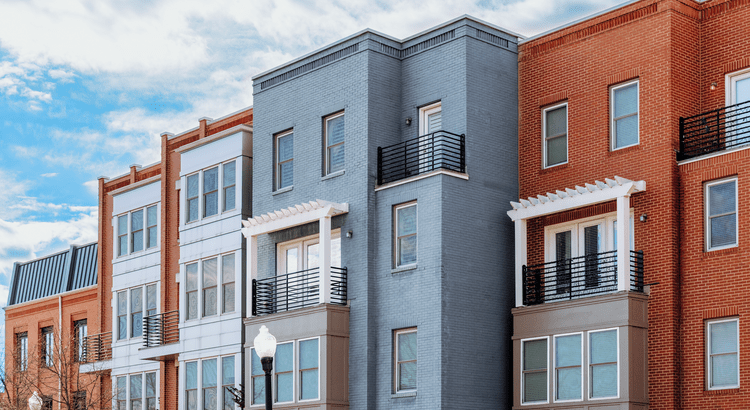
Buying your first home can feel frustrating when the numbers don’t line up the way you expected. You may know you’re ready but finding something that fits your life and your budget is the hard part.
That’s where townhomes come in.
Townhomes are becoming a bigger part of today’s housing supply, and that shift is opening doors for first-time buyers in a way we haven’t seen in years. That’s because they offer a more realistic path to step into homeownership without stretching yourself too thin, especially in a market where affordability can still feel tight.
There Are More Townhomes To Choose From
Builders are building more townhomes than they have in decades. In fact, when you look at data from the National Association of Home Builders (NAHB), nearly 1 in 5 new single-family homes being built today is a townhome. That’s the highest share on record (see graph below):
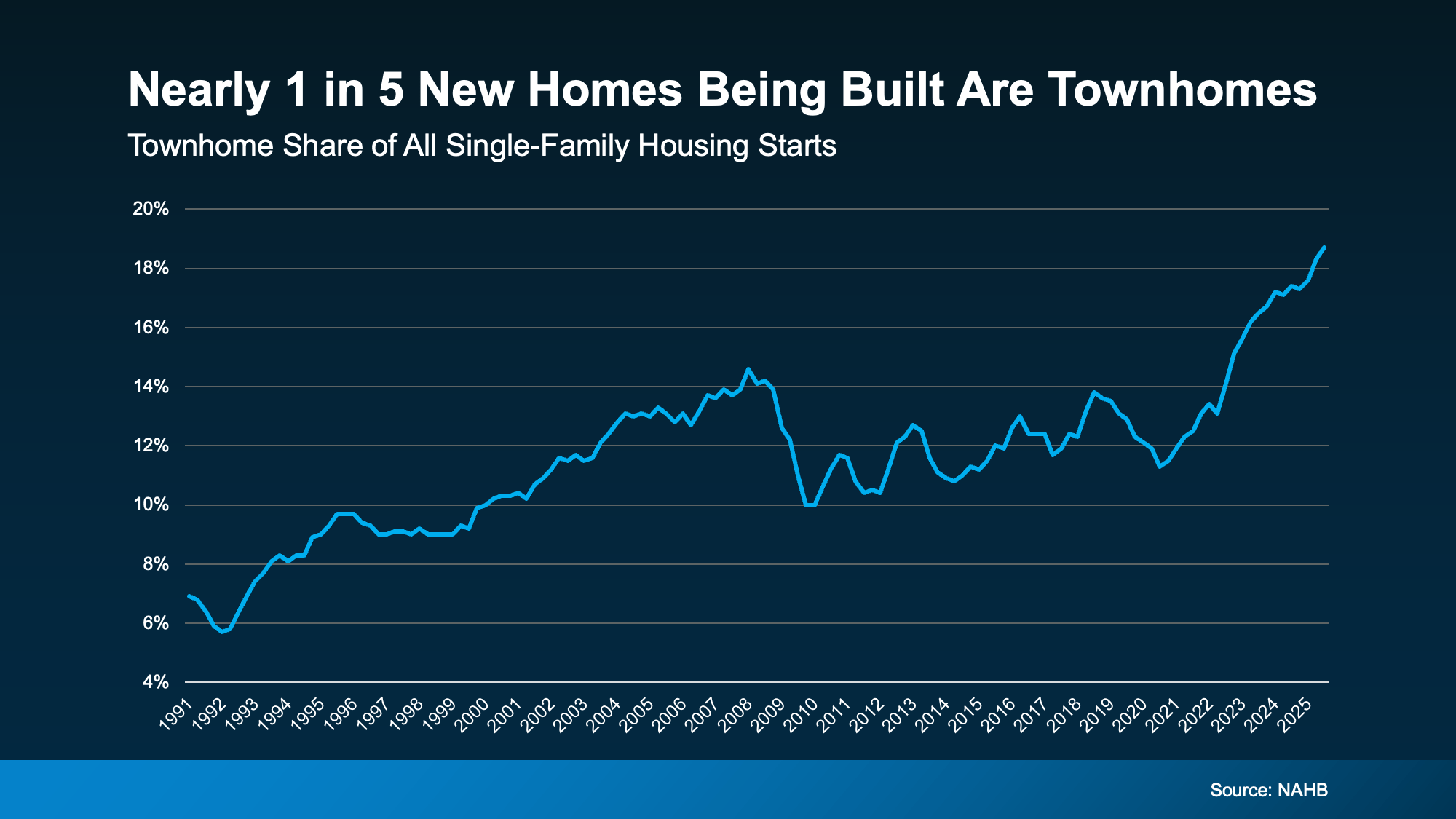
To put that in perspective, just a decade ago, townhomes made up closer to 1 in 10 new construction homes.
That gives today’s buyers far more townhome options than they had in the past. And that’s a really good thing.
Townhomes are one of the best ways for first-time buyers to finally get their foot in the door. And seeing that there’s more available for sale means one thing: you may have more opportunity to break into the market than you think.
Here’s why they’re such a popular choice for buyers like you.
Townhomes Tend To Be More Affordable
While prices vary by market, Redfin data shows townhomes are typically priced lower than detached single-family homes nationally. And that gap has grown in recent years as the supply of this type of home has grown too (see graph below):
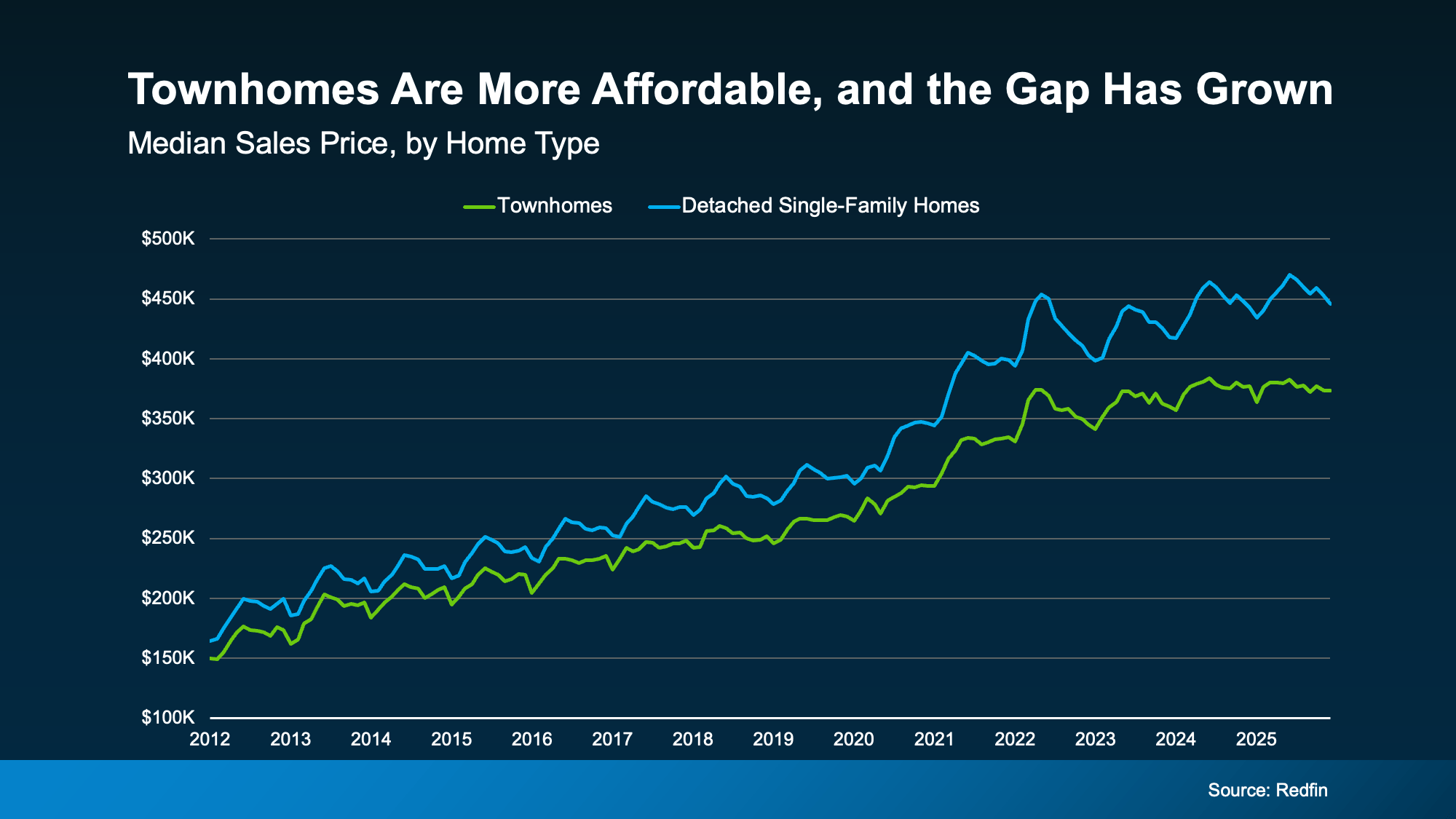 There are two main reasons you may find a better deal on a townhome today.
Reason #1: Size
Townhomes are usually smaller by design. Most modern townhomes fall in the 1,300–1,500 square foot range, which helps keep prices, and monthly payments, lower. Basically, it works like this. Since they usually have a smaller footprint, they’re cheaper to build, and that makes them less expensive to buy, too. Ali Wolf, Chief Economist at NewHomeSource, explains how this helps buyers:
“With the high cost of housing across the country, townhomes have emerged as a vital, more accessible entry point into homeownership. They are often priced lower than detached houses, offering buyers – especially first-timers, young professionals, and those downsizing – the chance to build equity without breaking the bank.”
Reason #2: Builder Motivation
And here’s another thing working in your favor. With more inventory than in recent years, homebuilders are motivated to sell what they’ve already built.
So, many may be more willing to negotiate, whether that means price flexibility, closing cost help, or potentially throwing in upgrades. According to the National Association of Realtors (NAR):
“. . . home builders say they’re ready to attract more first-time home buyers. They’re responding to affordability pressures through lower cost homes and builder incentives. About 40% of builders cut prices on newly built homes at the end of last year . . . Roughly two-thirds of builders also offered additional incentives, like mortgage rate buydowns.”
Bottom Line
If buying your first home feels just out of reach, the right option might not be a different timeline. It might be a different type of home.
If you want to talk through whether a townhome makes sense for you or see what’s available in our area, let’s connect.
It’s Getting More Affordable To Buy a Home
There’s finally a little good news for anyone who’s been priced out or sitting on the sidelines.
Buying a home is getting more affordable.
Monthly payments have started to come down, and the squeeze buyers have been feeling for the past few years is slowly loosening. Now, that doesn’t mean everyone can suddenly afford a home, but with how tough the market’s been, the improvement we’re seeing matters.
Affordability Is Finally Moving in the Right Direction
One of the best ways to see this shift is by looking at how much of a household’s income it takes to buy a home.
According to Zillow, housing is typically considered affordable when it takes 30% or less of your monthly income to cover your expenses. That includes your mortgage payment, taxes, insurance, and basic maintenance.
For the past few years, the math was well above that threshold, and it made buying a home unachievable for many. But now, we’re slowly moving back toward a balance. Zillow research shows it’s taking less of a typical household’s income to buy a home than it did just a few years ago (see graph below):
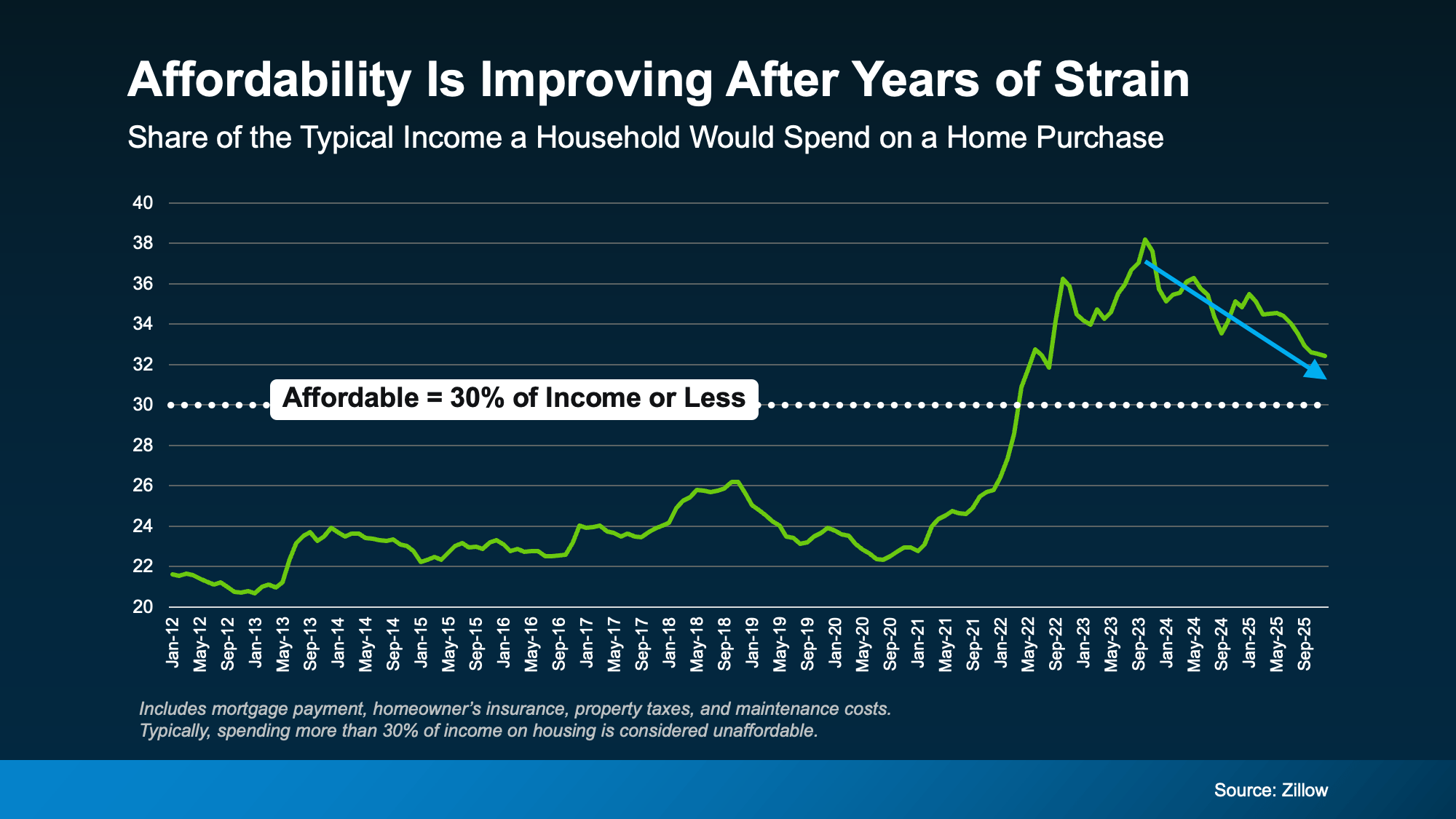 Now, we’re not all the way back to Zillow’s threshold of 30% of your income or less, so affordability is still tight. But things are trending in the right direction.
Why Affordability Is Improving
So, what’s driving the change? A lot of the focus lately has been on mortgage rates and how much they’ve come down over the course of the past year. But that’s not the only factor working in favor of buyers right now. Here are three trends benefiting buyers today:
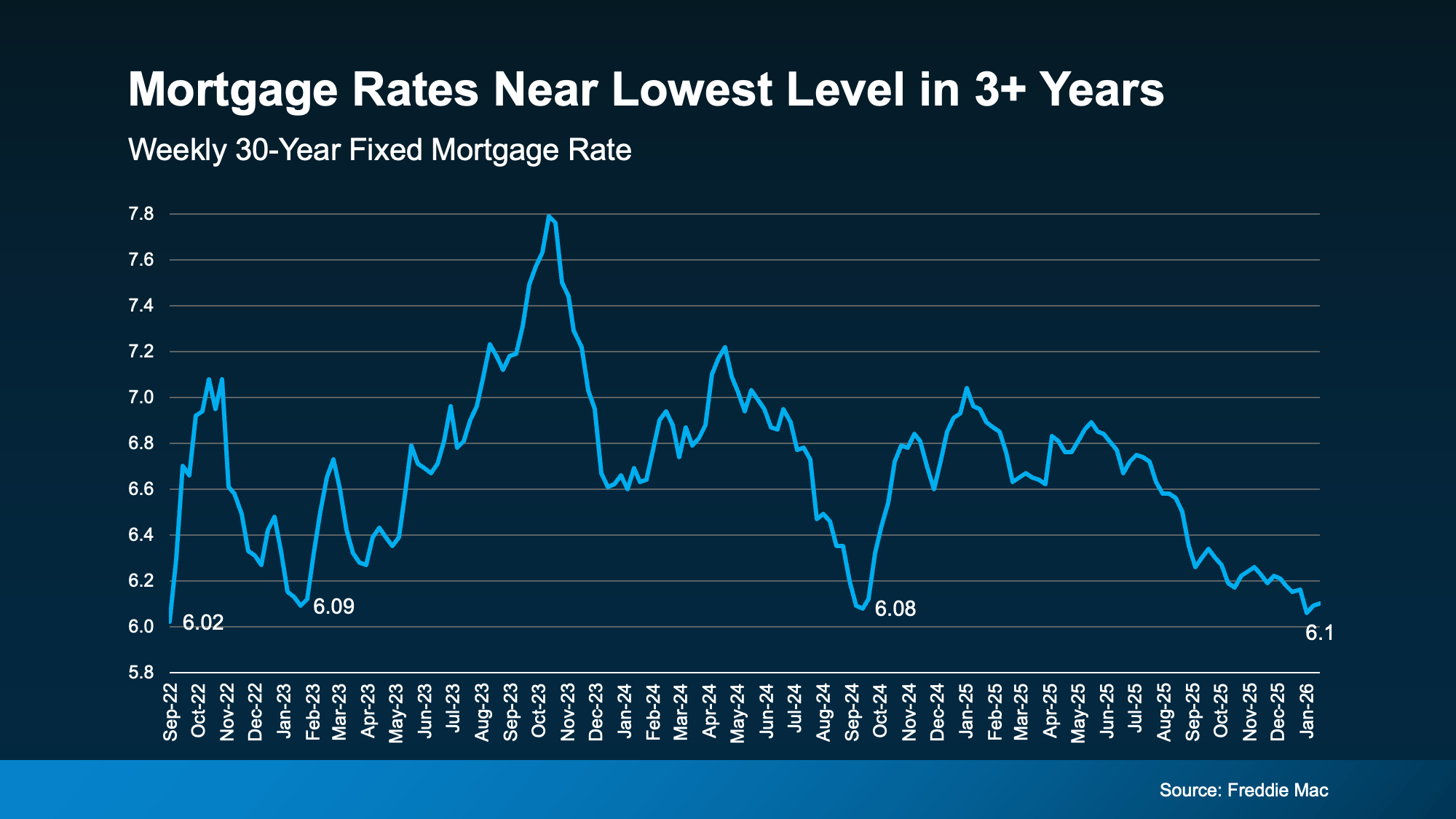
1. Mortgage rates have eased. Rates are near their lowest level in more than three years, which helps lower monthly payments (see graph below):
2. Home price growth has cooled. Prices aren’t falling nationally, but they’re growing much more slowly than they were a few years ago. That means buyers today aren’t facing the same sharp jumps in purchase prices, which helps keep monthly payments more manageable – and buying more predictable.
3. Wages are growing faster than home prices. This one matters a lot. As Mark Fleming, Chief Economist at First American, explains:
“When income growth exceeds house price growth, house-buying power improves—even if mortgage rates don’t decline meaningfully.”
None of this makes buying cheap, but it does explain why the math is starting to work a little better for buyers than it did even a just a year ago. Put simply, the forces that hurt affordability over the past few years are finally easing. Fleming again explains it well:
“Affordability remains challenging, but for the first time in several years, the underlying forces are finally aligned toward gradual improvement. Mortgage rates may drift down only slowly, but income growth exceeding house price appreciation will provide a boost to house-buying power — even in a higher-rate world. Affordability won’t snap back overnight, but like a ship finally catching a steady tailwind, it’s now sailing in the right direction.”
These three factors combined are why economists expect affordability to keep improving in 2026.
Where Homes Are Becoming Affordable First
But how much is affordability really going to improve? In some places, noticeably. Zillow says some markets are expected to fall back under their affordability threshold (30% of your income or less) by the end of the year:
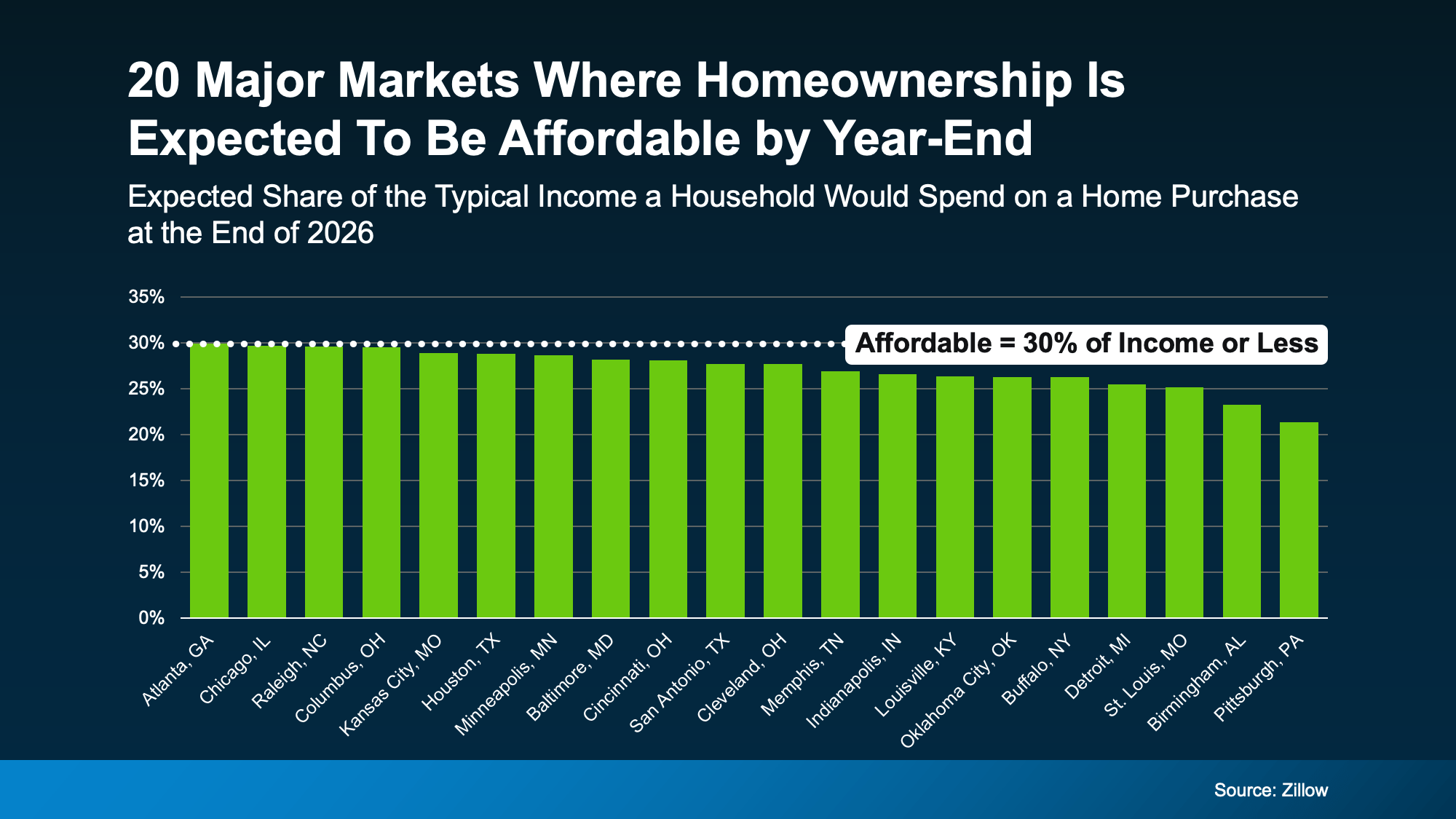
But that doesn’t mean you have to be in one of these markets or wait until year-end to buy. Other places are already seeing big improvements in affordability. So, talk to a local agent about what’s happening in your market. You may find you’re able to buy after all.
Bottom Line
For the first time in quite a while, affordability is easing. That’s a meaningful shift.
And because this improvement isn’t happening everywhere at the same speed, understanding what’s changing locally is what really makes a difference. If you want to see how these trends show up in our area, let’s talk it through.
Home Insurance Costs Are Rising: What Buyers Should Plan For

Buying a home is one of the biggest purchases you’ll ever make. And homeowner’s insurance is what protects that investment. Think of it as your safety net. NerdWallet explains it:
- Covers Repairs and Rebuilding Costs: If your home is damaged by fire, storms, or other covered events, it helps pay for repairs and possibly even a full rebuild, if that’s deemed necessary.
- Protects Your Belongings: It can also cover personal items like furniture, electronics, jewelry, and clothing if they’re stolen or damaged.
- Provides Liability Coverage: And, if someone gets injured on your property, your policy can help cover medical bills or legal expenses.
But that peace of mind does come with a cost, and lately those costs have been rising.
Why Home Insurance Premiums Are Going Up
There are a number of factors causing insurance premiums to rise today. But, in the simplest sense, here’s what’s driving prices up according to the Insurance Research Council (IRC).
Severe weather events and natural disasters are happening increasingly often, leading to more claims. At the same time, homebuilding materials and labor are more expensive. So, when it comes time to work on those claims, insurers have to manage higher costs to repair or rebuild the affected homes.
That combination adds up to higher premiums. You can see how it’s climbed recently in the graph below. Each bar marks the percentage increase in insurance costs for that calendar year.
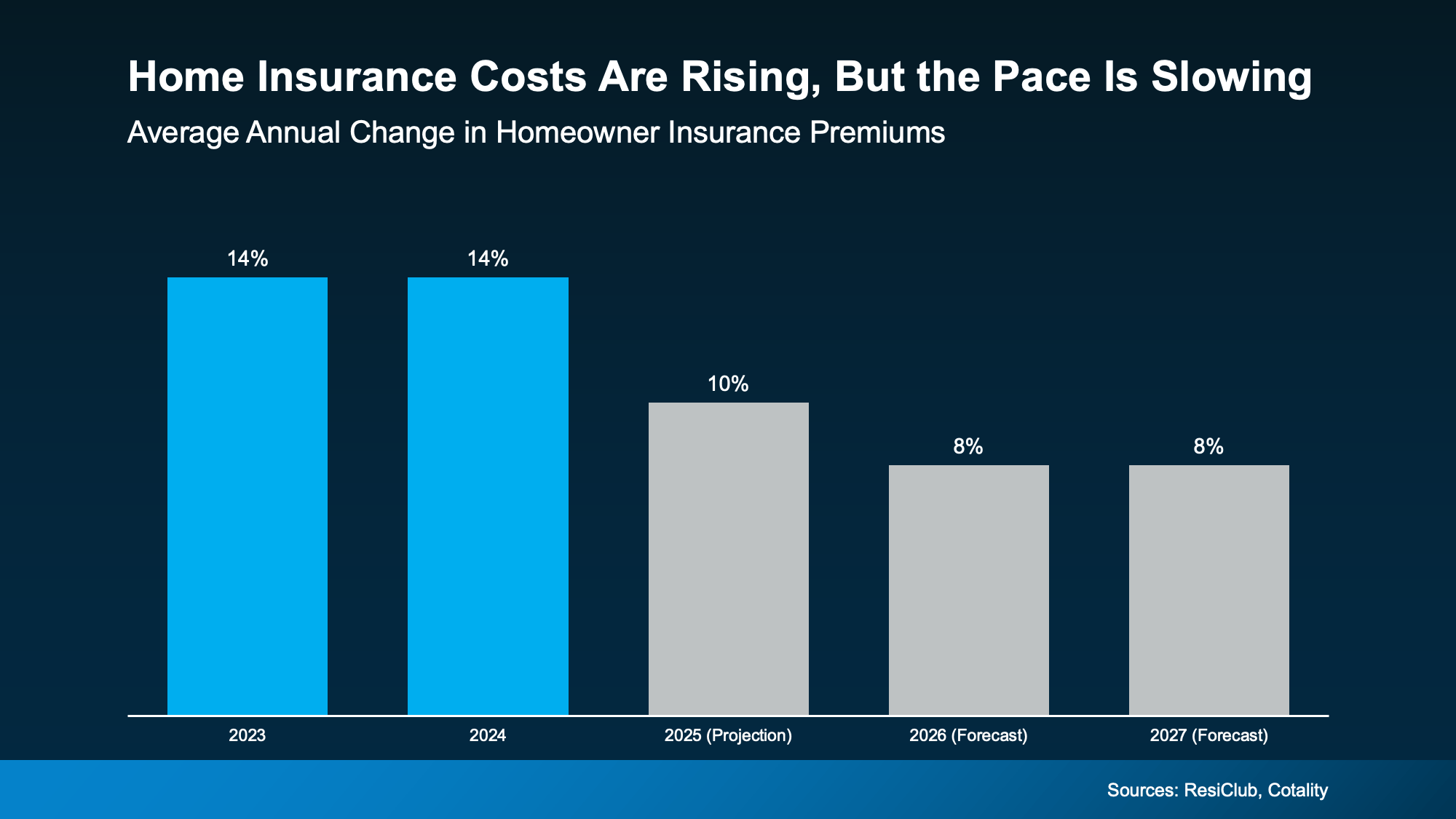 The good news is, the annual pace of the increase may be starting to ease according to ResiClub and Cotality. By their count:
- In 2023 and 2024, insurance costs went up 14% a year.
- In 2025, they rose about 10%.
- And in 2026 and 2027, it’s expected to go up about 8% each year.
That’s still an increase, but at least the pace is slowing down. And here’s another silver lining.
While insurance costs are rising, mortgage rates are falling. And that can help offset some of this expense. As Michael Gaines, Senior VP of Capital Markets, Cardinal Financial, explains:
“Rising taxes and insurance do create pressure, but they don’t erase the benefits of a lower rate . . . A small rate improvement, paired with the right loan program and smart planning, can still make homeownership possible . . . It’s less about one factor canceling another out, and more about helping buyers layer the right solutions together.”
Costs Are Going To Be Different Depending on Where You Buy
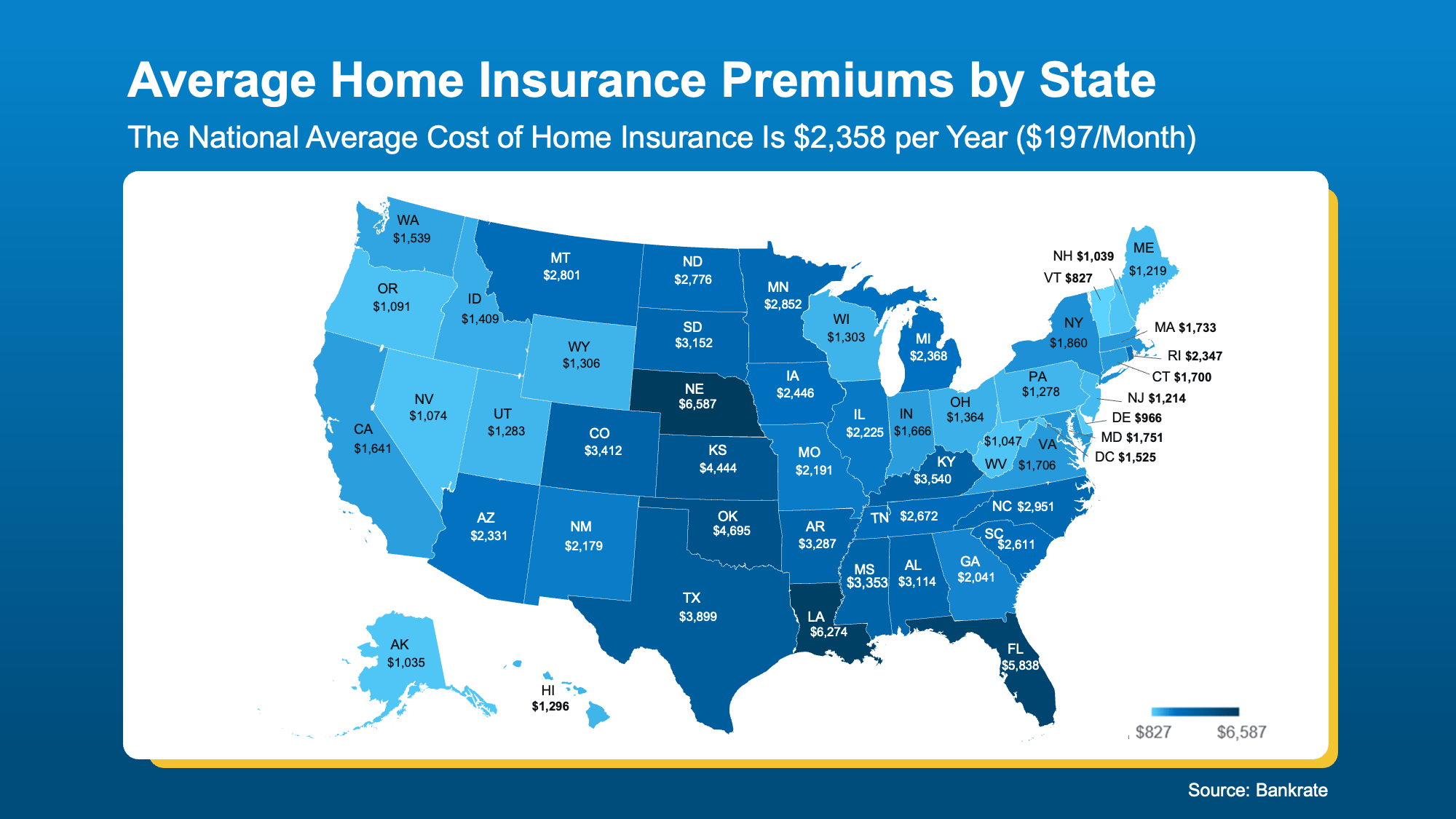
So how much do you need to budget for this? It depends on the price point and location of house, the coverage you need, and more. And just like with everything else in real estate, costs vary by area.
You can get a rough idea of your state’s typical premiums in the map below:
So, What Can You Do About It?
 So, What Can You Do About It?
Generally speaking, your first insurance payment will be wrapped into your closing costs. But after that, it’ll become a recurring expense. That’s why knowing these premiums are rising is so important. It helps you factor that into your budget, so you go in with a full picture of what you can comfortably afford.
If you’re crunching the numbers and trying to find other ways to save, here are a few tips from Insurify and NerdWallet that can help you get the best insurance price possible:
- Shop Around – Compare quotes from multiple companies.
- Bundle Policies – Combine home and auto for discounts.
- Ask About Discounts – Don’t miss out on savings you may qualify for.
- Highlight Upgrades – Features like a new roof or storm windows can cut costs.
- Improve Your Credit – A stronger credit score can mean better premiums.
Bottom Line
If you’re thinking about buying a home, don’t forget to plan ahead for your homeowner’s insurance.
While costs are rising, knowing what to expect and how to shop around can make a big difference as you’re budgeting for your purchase. Because this isn’t coverage you’ll want to skimp on. It’s your best protection for what’s likely your biggest investment.


